Building Inspection Checklist
A free building inspection checklist for FM and property teams — roof, fabric, structure, services, and safety checks across the whole building.
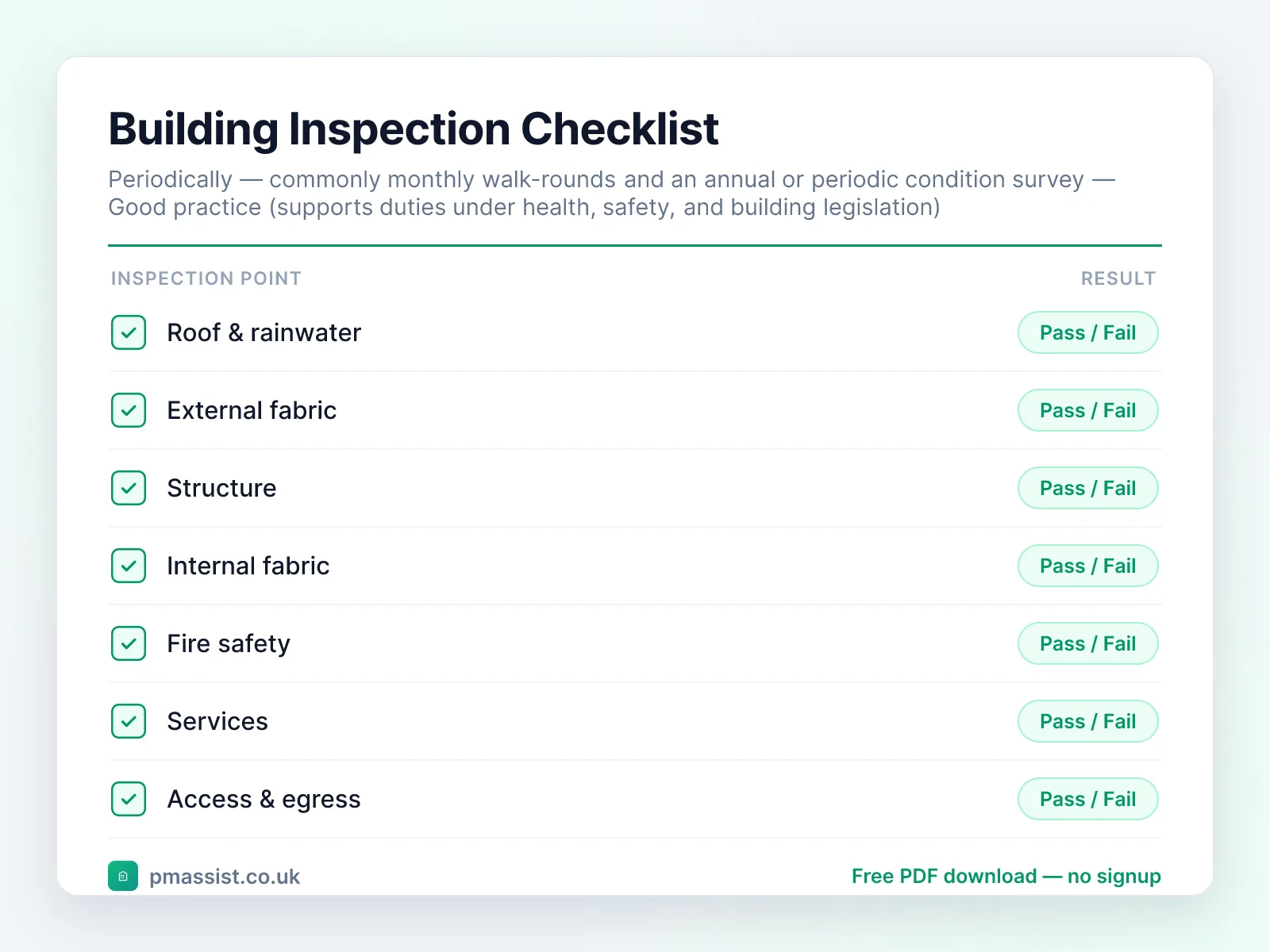
Periodically — commonly monthly walk-rounds and an annual or periodic condition survey
FM, estates, or property teams; a building surveyor for detailed condition surveys
Good practice (supports duties under health, safety, and building legislation)
A building inspection is a periodic condition and safety survey of a building's fabric, structure, and services, used by FM and property teams to spot deterioration, defects, and hazards early. It supports planned maintenance, budgeting, and duty-of-care obligations. This checklist provides a general framework for a routine building condition inspection, to be adapted to the building.
Building Inspection Checklist: what to check
Roof & rainwater
Roof coverings sound, gutters and downpipes clear and flowing
External fabric
Walls, cladding, windows, and doors sound and weathertight
Structure
No signs of cracking, movement, or structural distress
Internal fabric
Ceilings, walls, and floors sound with no water damage or damp
Fire safety
Escape routes clear, fire doors and compartmentation intact
Services
Mechanical and electrical plant operating without obvious defects
Access & egress
Stairs, walkways, and external areas safe and well lit
Welfare & cleanliness
Facilities clean and functional
External areas
Car parks, paths, and grounds safe and well maintained
Record
Defects logged with photos, priority, and remedial actions
Download printable checklist templates from the templates library, or build a custom one with the checklist generator.
Managing the records behind this inspection
Common inspection failures
- Blocked gutters and downpipes leading to water ingress
- Water damage, damp, or staining indicating leaks
- Compromised fire compartmentation or blocked escape routes
- Trip and slip hazards on paths, stairs, and floors
- Defects logged but not actioned between inspections
Related inspection checklists
What to record, and how long to keep it
Record findings by element and location with photographs, a condition grade, and an estimated remedial priority rather than a simple pass or fail. Keep results comparable between inspections so deterioration is visible: the value of a periodic building inspection is almost entirely in the trend, and a report that cannot be compared with the last one wastes the visit. Link findings to the asbestos register and any statutory records for the elements inspected, so a defect in a pre-2000 building is not investigated without that information to hand.
Compliance & CAFM
Run this building inspection on your phone
This checklist is a ready-made inspection form in PM Assist, included in every paid plan with the compliance register and planned maintenance.
- Complete it on your phone on site, with photos against each item.
- A failed item becomes a remedial action in one tap, with a priority and a deadline.
- Completed inspections stay on the building's record, ready for an auditor or insurer.
Sources
The regulatory positions on this page come from the following primary sources. Where guidance and legislation differ, the legislation governs — always confirm the requirements that apply to your own site and jurisdiction.
- Asbestos: managing and working with it — Health and Safety Executive
- Electrical safety at work — Health and Safety Executive
- Regulatory Reform (Fire Safety) Order 2005 — legislation.gov.uk
Frequently asked questions
What is a building inspection?
How often should a building be inspected?
What's the difference between a building inspection and a condition survey?
Keep inspection records searchable
Once inspections are running, the records pile up. PM Assist makes your inspection records, O&M manuals, and certificates instantly searchable — so you can produce evidence on demand.
The inspection is the easy part. Finding last year's record is not.
Ask an O&M manual a question and get the answer back with the page it came from. No signup, and you can drop in your own PDF instead of the sample.
“When was the last F-Gas check?”Runs against a sample chiller manual so you can see the shape of the answer — then try it on one of yours.