Roof Inspection Checklist
A free roof inspection checklist for commercial buildings — coverings, flashings, gutters, drainage, and safe access checks to catch leaks early.
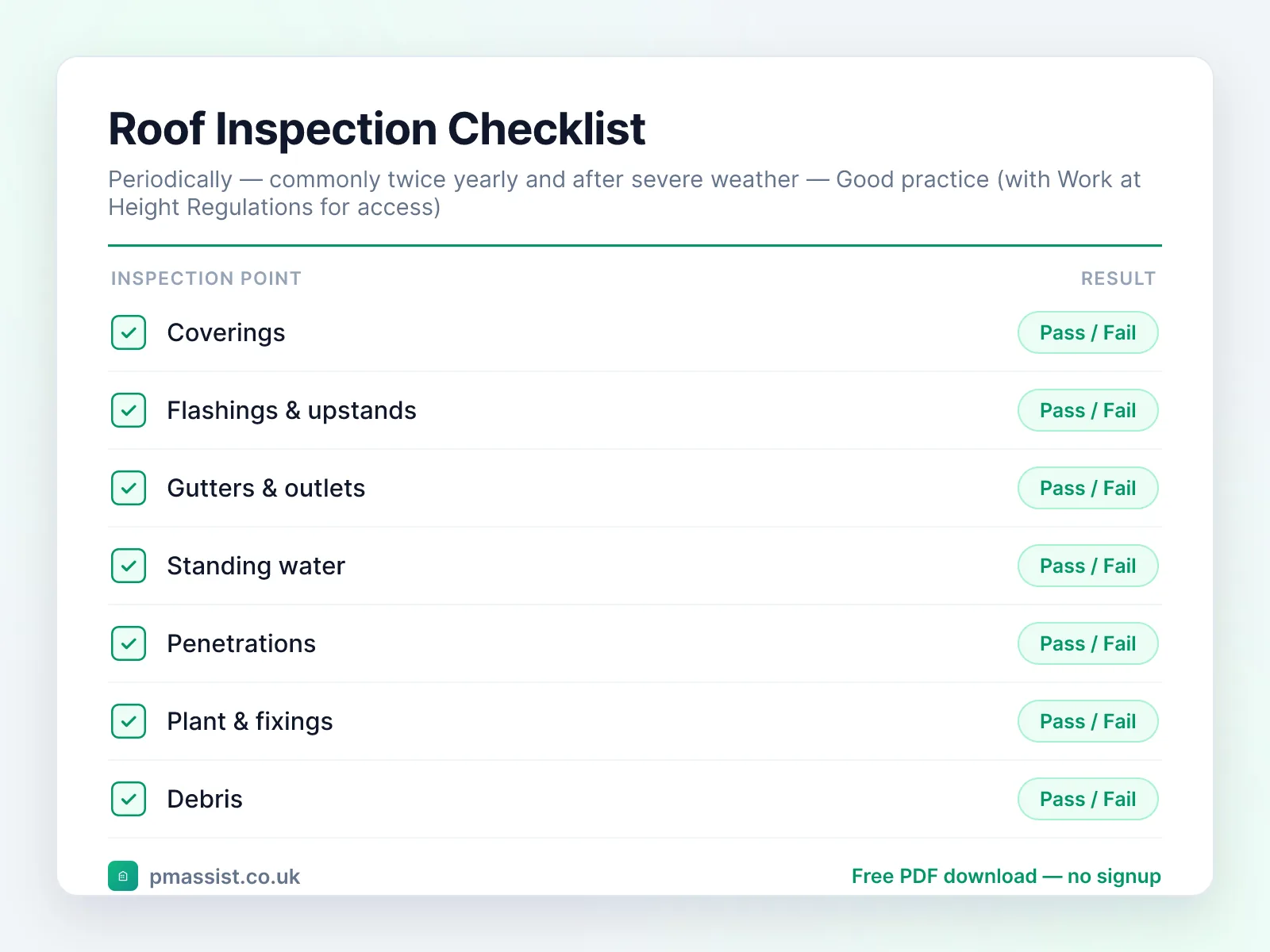
Periodically — commonly twice yearly and after severe weather
A competent person with safe roof access; a roofing specialist for detailed surveys
Good practice (with Work at Height Regulations for access)
A roof inspection is a periodic check of a building's roof to identify defects, blockages, and deterioration before they cause leaks and internal damage. Roofs are exposed and out of sight, so problems often go unnoticed until water penetrates. This checklist covers a routine roof condition inspection, carried out with safe access to the roof.
Roof Inspection Checklist: what to check
Coverings
Roof coverings (felt, membrane, tiles, sheets) sound and watertight
Flashings & upstands
Flashings, upstands, and joints intact and sealed
Gutters & outlets
Gutters, outlets, and downpipes clear and draining freely
Standing water
No ponding on flat roofs indicating drainage or falls problems
Penetrations
Roof penetrations, vents, and rooflights sealed and sound
Plant & fixings
Rooftop plant and its fixings secure and not damaging the roof
Debris
Roof clear of debris, moss, and vegetation
Edge protection
Guardrails and access provisions safe for future work
Internal signs
No internal staining or damp indicating a roof leak
Record
Defects logged with photos and remedial priorities
Download printable checklist templates from the templates library, or build a custom one with the checklist generator.
Managing the records behind this inspection
Further reading
Common inspection failures
- Blocked gutters and outlets causing overflow and water ingress
- Ponding water on flat roofs from poor drainage or falls
- Failed flashings, joints, or sealant at penetrations
- Moss, debris, and vegetation trapping moisture
- Damaged or displaced coverings after severe weather
Related inspection checklists
Related maintenance & guidance
What to record, and how long to keep it
Record the inspection date, the access method used, weather conditions at the time, and findings by roof area with photographs. Note anything not inspected and the reason, since roof access is frequently partial. Log defects with a priority and a target date, and keep results comparable between inspections so water ingress and membrane deterioration can be tracked over time. Retain the work at height risk assessment and permit alongside the inspection record.
Compliance & CAFM
Run this roof inspection on your phone
This checklist is a ready-made inspection form in PM Assist, included in every paid plan with the compliance register and planned maintenance.
- Complete it on your phone on site, with photos against each item.
- A failed item becomes a remedial action in one tap, with a priority and a deadline.
- The completed inspection can be logged against roof & rainwater inspection on the compliance register as the evidence it was done.
Sources
The regulatory positions on this page come from the following primary sources. Where guidance and legislation differ, the legislation governs — always confirm the requirements that apply to your own site and jurisdiction.
- Work at Height Regulations 2005 — legislation.gov.uk
- Work at height: the law — Health and Safety Executive
Frequently asked questions
How often should a roof be inspected?
What are the most common roof problems?
How should roof inspections be carried out safely?
Keep inspection records searchable
Once inspections are running, the records pile up. PM Assist makes your inspection records, O&M manuals, and certificates instantly searchable — so you can produce evidence on demand.
The inspection is the easy part. Finding last year's record is not.
Ask an O&M manual a question and get the answer back with the page it came from. No signup, and you can drop in your own PDF instead of the sample.
“When was the last F-Gas check?”Runs against a sample chiller manual so you can see the shape of the answer — then try it on one of yours.