Ladder Inspection Checklist
A free ladder inspection checklist for working at height — check stiles, rungs, feet, and locking mechanisms before use under the Work at Height Regulations.
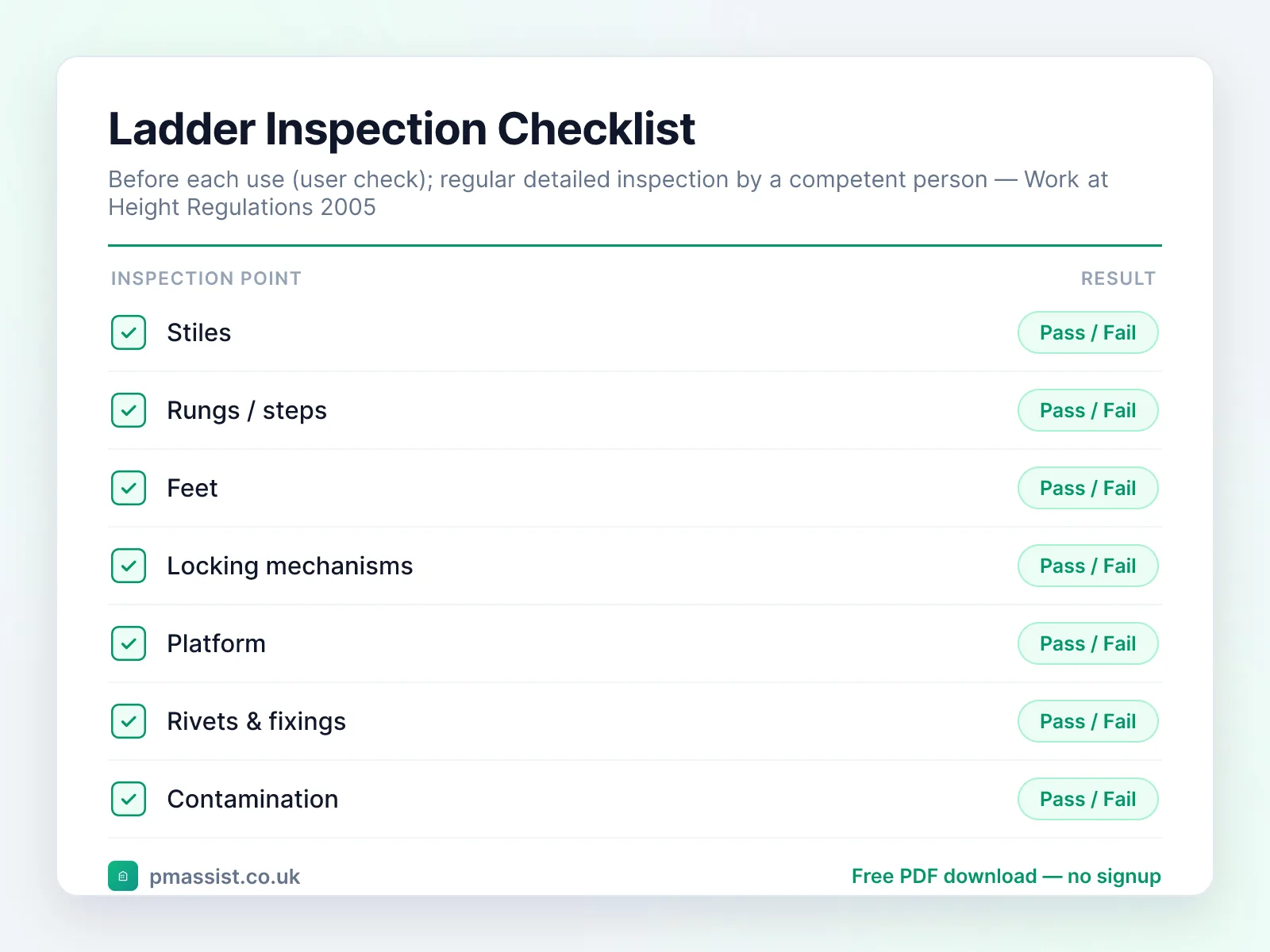
Before each use (user check); regular detailed inspection by a competent person
The user (pre-use); a competent person for the recorded detailed inspection
Work at Height Regulations 2005
A ladder inspection confirms a ladder is safe to use before it is relied upon for working at height. Under the Work at Height Regulations, ladders must be inspected before use and at regular intervals by a competent person, with any defective ladder taken out of use. This checklist covers the pre-use and periodic inspection of leaning and step ladders.
Ladder Inspection Checklist: what to check
Stiles
Not bent, split, or damaged
Rungs / steps
Present, secure, not worn, bent, or missing
Feet
Present, not worn or missing, providing grip
Locking mechanisms
Locking bars / spreaders engage and hold (step ladders)
Platform
Platform not split, buckled, or contaminated (step ladders)
Rivets & fixings
Secure with no missing or loose fixings
Contamination
Free of oil, grease, or wet paint that could cause slips
Overall condition
No visible damage; ladder rated for the load and use
Defective ladders
Any defective ladder clearly tagged and taken out of use
Record
Detailed periodic inspections recorded
Download printable checklist templates from the templates library, or build a custom one with the checklist generator.
Managing the records behind this inspection
Further reading
Common inspection failures
- Bent, split, or damaged stiles
- Worn or missing feet reducing grip
- Locking mechanisms that don't engage on step ladders
- Contamination with oil, grease, or wet paint
- Defective ladders left in use instead of being removed
Related inspection checklists
What to record, and how long to keep it
Record pre-use checks by the user and the recorded detailed inspection separately, with each ladder identified by a unique mark rather than by description. Log the inspector, the date, the result, and the next due date, and record any ladder taken out of service along with how it was quarantined or disposed of — a condemned ladder left in the store is a common and serious finding. Keep the inspection interval justification, as it should follow from how heavily and harshly the ladder is used.
Compliance & CAFM
Run this ladder inspection on your phone
This checklist is a ready-made inspection form in PM Assist, included in every paid plan with the compliance register and planned maintenance.
- Complete it on your phone on site, with photos against each item.
- A failed item becomes a remedial action in one tap, with a priority and a deadline.
- Completed inspections stay on the building's record, ready for an auditor or insurer.
Sources
The regulatory positions on this page come from the following primary sources. Where guidance and legislation differ, the legislation governs — always confirm the requirements that apply to your own site and jurisdiction.
- Work at Height Regulations 2005 — legislation.gov.uk
- Work at height: the law — Health and Safety Executive
Frequently asked questions
How often should ladders be inspected?
Who can inspect a ladder?
What makes a ladder unsafe?
Keep inspection records searchable
Once inspections are running, the records pile up. PM Assist makes your inspection records, O&M manuals, and certificates instantly searchable — so you can produce evidence on demand.
The inspection is the easy part. Finding last year's record is not.
Ask an O&M manual a question and get the answer back with the page it came from. No signup, and you can drop in your own PDF instead of the sample.
“When was the last F-Gas check?”Runs against a sample chiller manual so you can see the shape of the answer — then try it on one of yours.