Workplace Inspection Checklist
A free workplace health and safety inspection checklist — housekeeping, walkways, fire safety, electrical, welfare, and hazard checks for a safe workplace.
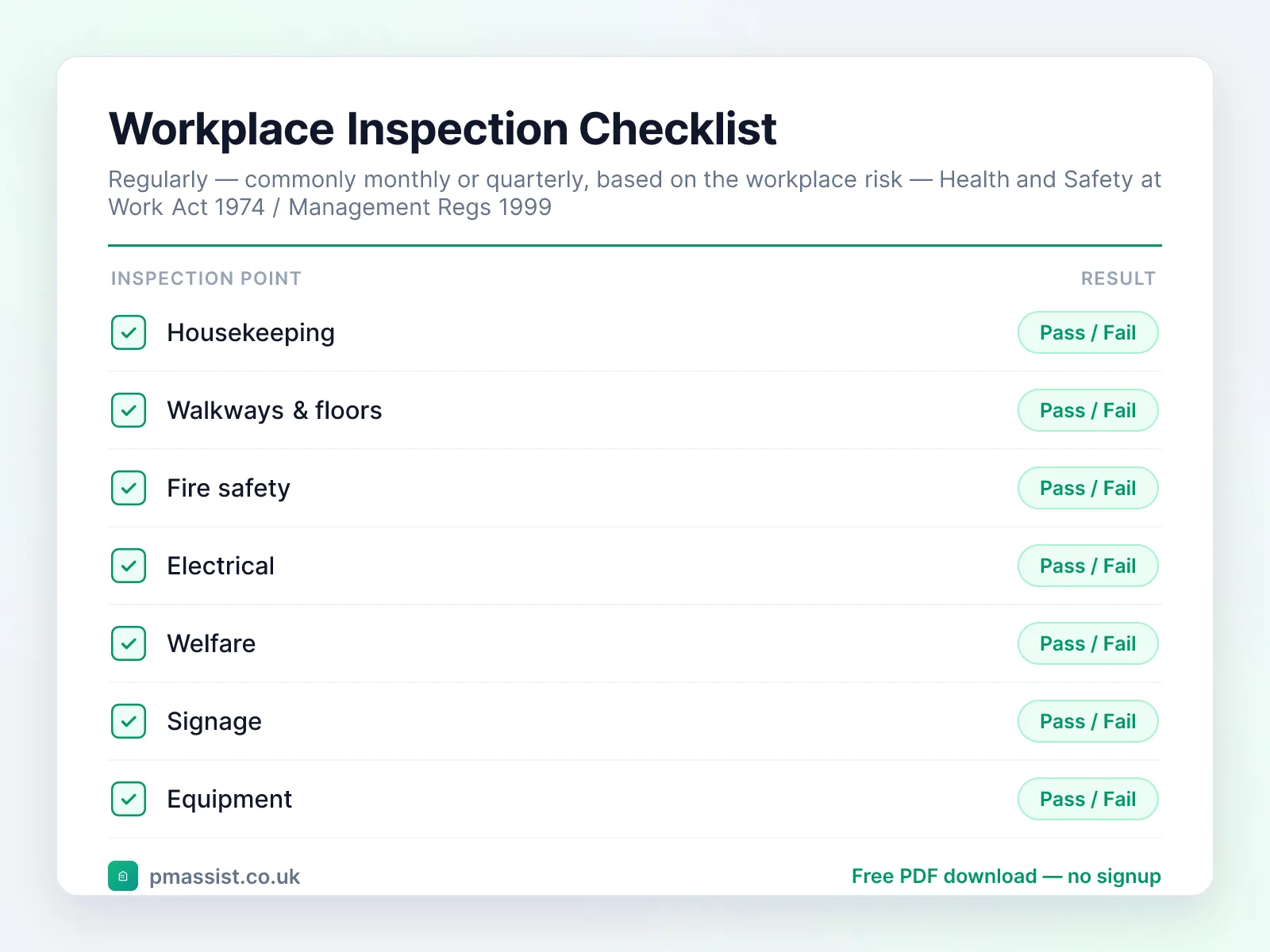
Regularly — commonly monthly or quarterly, based on the workplace risk
A competent person — often a manager, supervisor, or health and safety representative
Health and Safety at Work Act 1974 / Management Regs 1999
A workplace inspection is a proactive walk-through to identify hazards and confirm health and safety standards are being met, supporting an employer's duties under the Health and Safety at Work Act and the Management of Health and Safety at Work Regulations. This checklist provides a general framework covering the common areas of a workplace inspection, to be adapted to your premises and risks.
Workplace Inspection Checklist: what to check
Housekeeping
Areas tidy, no build-up of waste or combustible materials
Walkways & floors
Clear, even, and free of trip and slip hazards
Fire safety
Escape routes clear, fire doors working, extinguishers in place
Electrical
No damaged cables, overloaded sockets, or exposed wiring
Welfare
Toilets, washing, and rest facilities clean and stocked
Signage
Safety signage present, correct, and visible
Equipment
Machinery and equipment guarded and in good condition
Storage
Materials stored safely, heavy items low, racking sound
First aid
First aid provision available, stocked, and signed
Record
Findings, actions, and responsibilities recorded and tracked
Download printable checklist templates from the templates library, or build a custom one with the checklist generator.
Managing the records behind this inspection
Further reading
Common inspection failures
- Blocked or obstructed escape routes and fire exits
- Trailing cables and overloaded sockets
- Trip hazards from trailing leads, uneven floors, or stored items
- Poor housekeeping and accumulation of combustible waste
- Damaged or missing machine guards
- Actions from previous inspections left unaddressed
Related inspection checklists
Related maintenance & guidance
What to record, and how long to keep it
Record the date, the areas covered, who carried out the inspection, and every finding with a risk rating, a named owner, and a target date. Close-out evidence is the part most often missing: an inspection that raises twenty findings and records no completions reads as a system that identifies problems without fixing them, which is worse evidence than no inspection at all. Keep a rolling record so trends are visible — a hazard that recurs across three inspections is a systemic issue, not a housekeeping one.
Compliance & CAFM
Run this workplace inspection on your phone
This checklist is a ready-made inspection form in PM Assist, included in every paid plan with the compliance register and planned maintenance.
- Complete it on your phone on site, with photos against each item.
- A failed item becomes a remedial action in one tap, with a priority and a deadline.
- Completed inspections stay on the building's record, ready for an auditor or insurer.
Sources
The regulatory positions on this page come from the following primary sources. Where guidance and legislation differ, the legislation governs — always confirm the requirements that apply to your own site and jurisdiction.
- PUWER: using work equipment safely — Health and Safety Executive
- COSHH: control of substances hazardous to health — Health and Safety Executive
Frequently asked questions
How often should a workplace inspection be done?
Who should carry out workplace inspections?
What should a workplace inspection cover?
Keep inspection records searchable
Once inspections are running, the records pile up. PM Assist makes your inspection records, O&M manuals, and certificates instantly searchable — so you can produce evidence on demand.
The inspection is the easy part. Finding last year's record is not.
Ask an O&M manual a question and get the answer back with the page it came from. No signup, and you can drop in your own PDF instead of the sample.
“When was the last F-Gas check?”Runs against a sample chiller manual so you can see the shape of the answer — then try it on one of yours.