Health & Safety Inspection Checklist
A free health and safety checklist for buildings and workplaces — fire, electrical, welfare, first aid, risk assessments, and the records that evidence compliance.
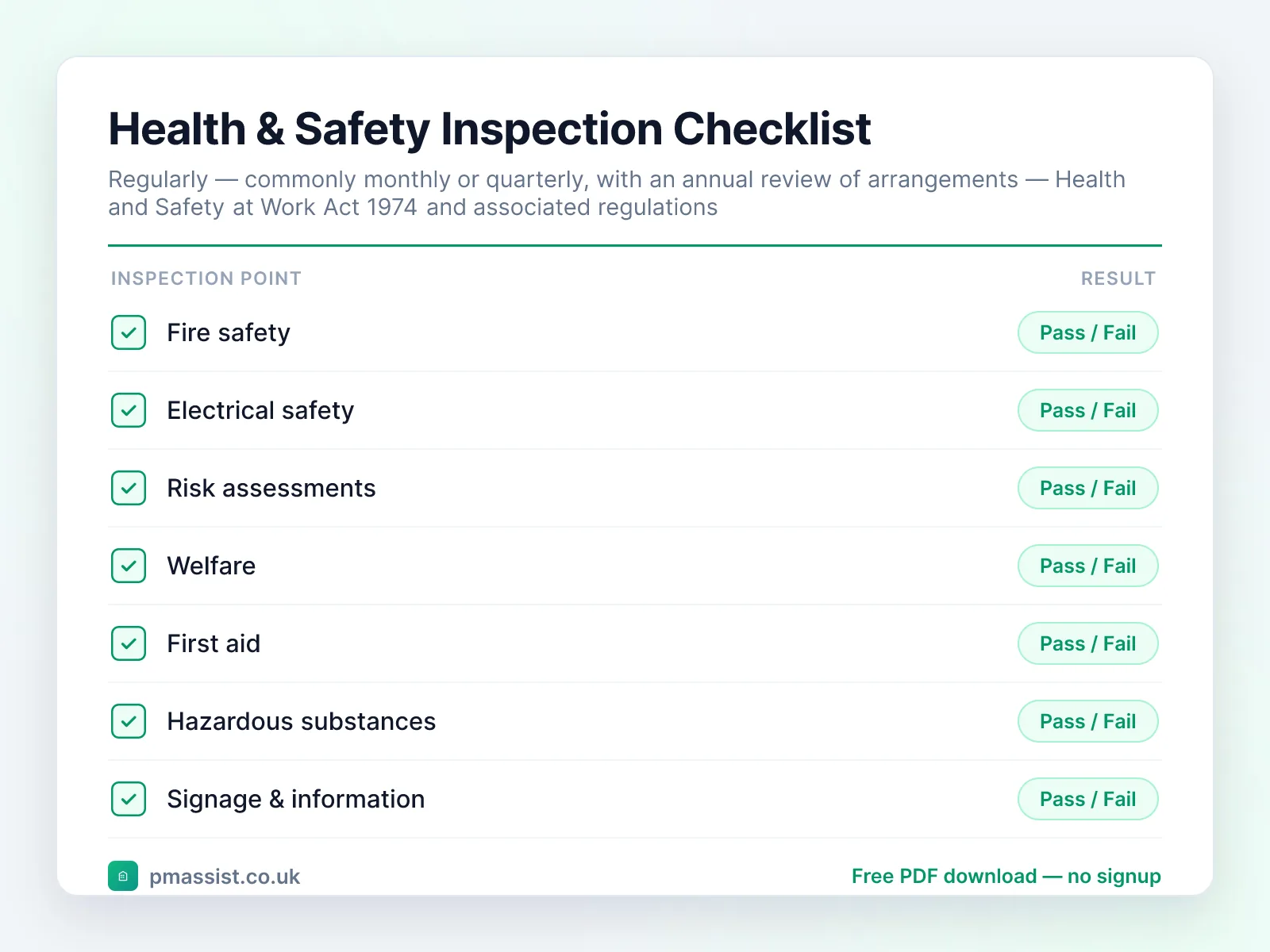
Regularly — commonly monthly or quarterly, with an annual review of arrangements
A competent person — a manager, health and safety officer, or safety representative
Health and Safety at Work Act 1974 and associated regulations
A health and safety inspection reviews the arrangements that keep people safe in a building or workplace — from physical hazards to the paperwork that demonstrates duties are being met. It supports compliance with the Health and Safety at Work Act and associated regulations. This checklist provides a general framework spanning the physical and management aspects of health and safety.
Health & Safety Inspection Checklist: what to check
Fire safety
Fire risk assessment current, escape routes clear, systems tested
Electrical safety
Fixed wiring inspected (EICR), portable appliances tested as needed
Risk assessments
Suitable and sufficient, current, and communicated
Welfare
Toilets, washing, drinking water, and rest facilities adequate
First aid
Trained first aiders, stocked first aid kits, and accident book
Hazardous substances
COSHH assessments in place and substances stored safely
Signage & information
Safety signage and the health and safety law poster displayed
Training
Staff trained and inductions recorded for the risks they face
Records
Inspection, test, and assessment records kept and retrievable
Actions
Previous actions closed out and new actions assigned
Download printable checklist templates from the templates library, or build a custom one with the checklist generator.
Managing the records behind this inspection
Common inspection failures
- Risk assessments out of date or not communicated to staff
- Missing or expired statutory records (EICR, fire, PAT)
- Inadequate first aid provision or an unfilled accident book
- COSHH substances stored or used without assessment
- Actions from previous inspections not closed out
Related inspection checklists
What to record, and how long to keep it
Record findings against a named area and responsible person, with risk-rated actions and completion evidence. Keep inspections linked to the risk assessments they test: an inspection is the check that controls identified in a risk assessment are actually in place and working, so a finding should be traceable back to the control it relates to. Retain records long enough to demonstrate a pattern of monitoring — typically at least three years — and keep them accessible to safety representatives.
Compliance & CAFM
Run this health & safety inspection on your phone
This checklist is a ready-made inspection form in PM Assist, included in every paid plan with the compliance register and planned maintenance.
- Complete it on your phone on site, with photos against each item.
- A failed item becomes a remedial action in one tap, with a priority and a deadline.
- Completed inspections stay on the building's record, ready for an auditor or insurer.
Sources
The regulatory positions on this page come from the following primary sources. Where guidance and legislation differ, the legislation governs — always confirm the requirements that apply to your own site and jurisdiction.
- PUWER: using work equipment safely — Health and Safety Executive
- COSHH: control of substances hazardous to health — Health and Safety Executive
- Electrical safety at work — Health and Safety Executive
Frequently asked questions
What is a health and safety inspection?
How often should health and safety inspections happen?
What records support health and safety compliance?
Keep inspection records searchable
Once inspections are running, the records pile up. PM Assist makes your inspection records, O&M manuals, and certificates instantly searchable — so you can produce evidence on demand.
The inspection is the easy part. Finding last year's record is not.
Ask an O&M manual a question and get the answer back with the page it came from. No signup, and you can drop in your own PDF instead of the sample.
“When was the last F-Gas check?”Runs against a sample chiller manual so you can see the shape of the answer — then try it on one of yours.