Sprinkler System Weekly Inspection Checklist
A free weekly sprinkler checklist — valve and water supply pressures, the alarm test, pump start, control valves locked open and the log book records.
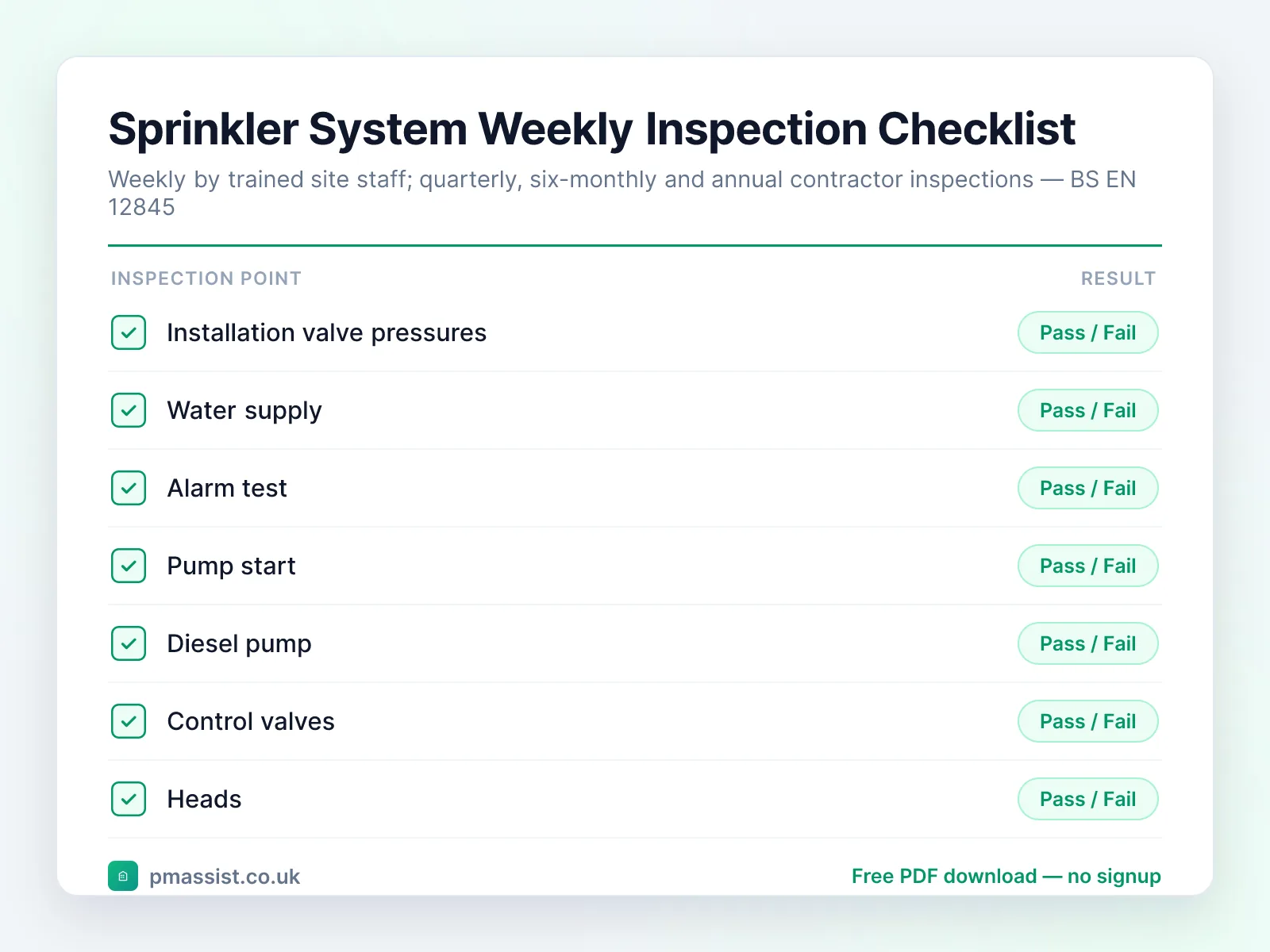
Weekly by trained site staff; quarterly, six-monthly and annual contractor inspections
Trained site staff (weekly); a competent sprinkler contractor (servicing)
BS EN 12845
Automatic sprinkler systems need a short weekly routine between contractor services: checking the installation valve pressures, sounding the water motor alarm or electric alarm, starting the pumps and confirming every control valve is locked open. BS EN 12845 (and LPC rules for insured systems) set out this routine, which is usually carried out by trained site staff and recorded in the sprinkler log book. A closed valve or failed pump found on a weekly check is a system that would not have worked in a fire.
Sprinkler System Weekly Inspection Checklist: what to check
Installation valve pressures
Gauges read within the normal range on each installation
Water supply
Tank level or town main pressure is normal
Alarm test
Water motor gong or electric alarm sounds when tested
Pump start
Pumps start automatically on pressure drop and run correctly
Diesel pump
Fuel, oil and coolant levels correct; battery charged
Control valves
Every control valve open and strapped or locked in position
Heads
No obvious damage, paint, obstructions or stock stacked too close
Spare heads
Spares cabinet stocked with the correct heads and spanner
Record
Readings and results entered in the sprinkler log book
Download printable checklist templates from the templates library, or build a custom one with the checklist generator.
Common inspection failures
- Control valves left closed after maintenance
- Diesel pump failing to start on test
- Stock stacked too close to sprinkler heads
- Weekly test not recorded
- Painted or damaged heads not reported
Related inspection checklists
What to record, and how long to keep it
Record each weekly test in the sprinkler log book: gauge readings on each installation, the alarm test result, pump start pressures and run times, the state of every control valve and any fault. Insurers often ask for the log, and a missing week is treated as a missed test.
Compliance & CAFM
Run this sprinkler system weekly inspection on your phone
This checklist is a ready-made inspection form in PM Assist, included in every paid plan with the compliance register and planned maintenance.
- Complete it on your phone on site, with photos against each item.
- A failed item becomes a remedial action in one tap, with a priority and a deadline.
- The completed inspection can be logged against sprinkler system service on the compliance register as the evidence it was done.
Frequently asked questions
What is the weekly sprinkler test?
Who can carry out the weekly sprinkler test?
What happens if a sprinkler valve is found closed?
Keep inspection records searchable
Once inspections are running, the records pile up. PM Assist makes your inspection records, O&M manuals, and certificates instantly searchable — so you can produce evidence on demand.
The inspection is the easy part. Finding last year's record is not.
Ask an O&M manual a question and get the answer back with the page it came from. No signup, and you can drop in your own PDF instead of the sample.
“When was the last F-Gas check?”Runs against a sample chiller manual so you can see the shape of the answer — then try it on one of yours.