Fire Alarm Inspection Checklist
A free fire alarm inspection checklist to BS 5839 — the weekly call point test, panel status, zone and battery checks, and the fire log book records.
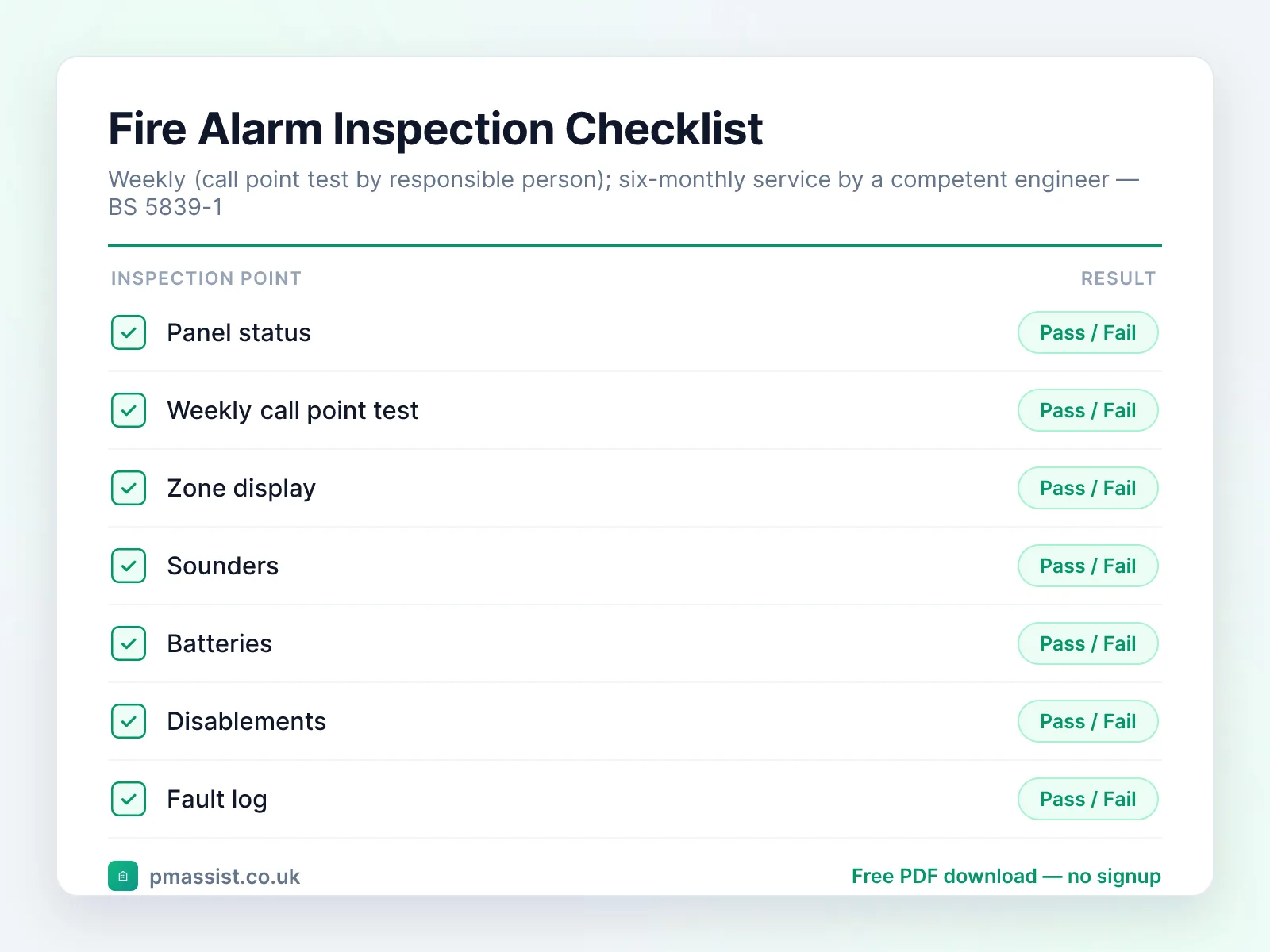
Weekly (call point test by responsible person); six-monthly service by a competent engineer
The responsible person (weekly); a competent fire alarm engineer (servicing)
BS 5839-1
A fire alarm inspection confirms the detection and alarm system is healthy and will raise the alarm in a fire. Under BS 5839-1, the responsible person carries out a weekly test of a manual call point, and a competent engineer services the system at least every six months. This checklist covers the routine weekly inspection and status checks that keep the system reliable between services.
Fire Alarm Inspection Checklist: what to check
Panel status
Panel shows normal — no fault, fire, or disablement indications
Weekly call point test
A different manual call point tested each week and the alarm sounds
Zone display
Panel displays the correct zone for the tested device
Sounders
Audible and visual alarm devices operate at the correct level
Batteries
Standby battery healthy and charger maintaining charge
Disablements
No detectors or zones left isolated without record
Fault log
Event/fault log reviewed and any recurring faults noted
ARC link
Auto-dialler / alarm receiving centre link signals correctly (if fitted)
Record
Weekly test and any faults logged in the fire log book
Download printable checklist templates from the templates library, or build a custom one with the checklist generator.
What this inspection typically costs
£200–£900 per year for servicing on a typical commercial system
- What moves the price
- Device count and number of panels matter more than floor area. Addressable systems, remote monitoring, and multi-building contracts sit at the upper end; a small conventional panel sits at the lower end. The weekly in-house call point test costs nothing but staff time.
- Typical time
- Servicing is normally split across two or more visits per year
Indicative UK market ranges compiled from published price guides, last reviewed August 2026. A planning guide, not a quotation — prices vary by region, building, and contractor.
Managing the records behind this inspection
Further reading
Common inspection failures
- Weekly test not carried out or not logged — the most common non-conformity
- Standby batteries past their life causing power supply faults
- Detectors left isolated after building works
- False alarms from contamination or unsuitable detector types
- Zone chart out of date after refurbishment
Related inspection checklists
What to record, and how long to keep it
The fire alarm log book is the primary record and should hold the weekly call point test (including which call point, since they are tested in rotation), every service visit, all faults and their rectification, every disablement with the reason and duration, and all false alarms with an investigated cause. False alarm causes matter as much as the tests: a pattern nobody analysed is the usual route to a system being partially disabled. Keep the commissioning certificate and cause-and-effect schedule with the log — they define what the system is supposed to do.
Compliance & CAFM
Run this fire alarm inspection on your phone
This checklist is a ready-made inspection form in PM Assist, included in every paid plan with the compliance register and planned maintenance.
- Complete it on your phone on site, with photos against each item.
- A failed item becomes a remedial action in one tap, with a priority and a deadline.
- The completed inspection can be logged against fire alarm & detection service on the compliance register as the evidence it was done.
Sources
The regulatory positions on this page come from the following primary sources. Where guidance and legislation differ, the legislation governs — always confirm the requirements that apply to your own site and jurisdiction.
- Regulatory Reform (Fire Safety) Order 2005 — legislation.gov.uk
- Fire Safety (England) Regulations 2022: guidance — GOV.UK
Frequently asked questions
How often should a fire alarm be inspected?
What is the weekly fire alarm test?
Who can service a fire alarm system?
Keep inspection records searchable
Once inspections are running, the records pile up. PM Assist makes your inspection records, O&M manuals, and certificates instantly searchable — so you can produce evidence on demand.
The inspection is the easy part. Finding last year's record is not.
Ask an O&M manual a question and get the answer back with the page it came from. No signup, and you can drop in your own PDF instead of the sample.
“When was the last F-Gas check?”Runs against a sample chiller manual so you can see the shape of the answer — then try it on one of yours.