Fire Extinguisher Inspection Checklist
A free monthly fire extinguisher inspection checklist to BS 5306 — check pressure, seals, location, and signage, and record it in the fire log book.
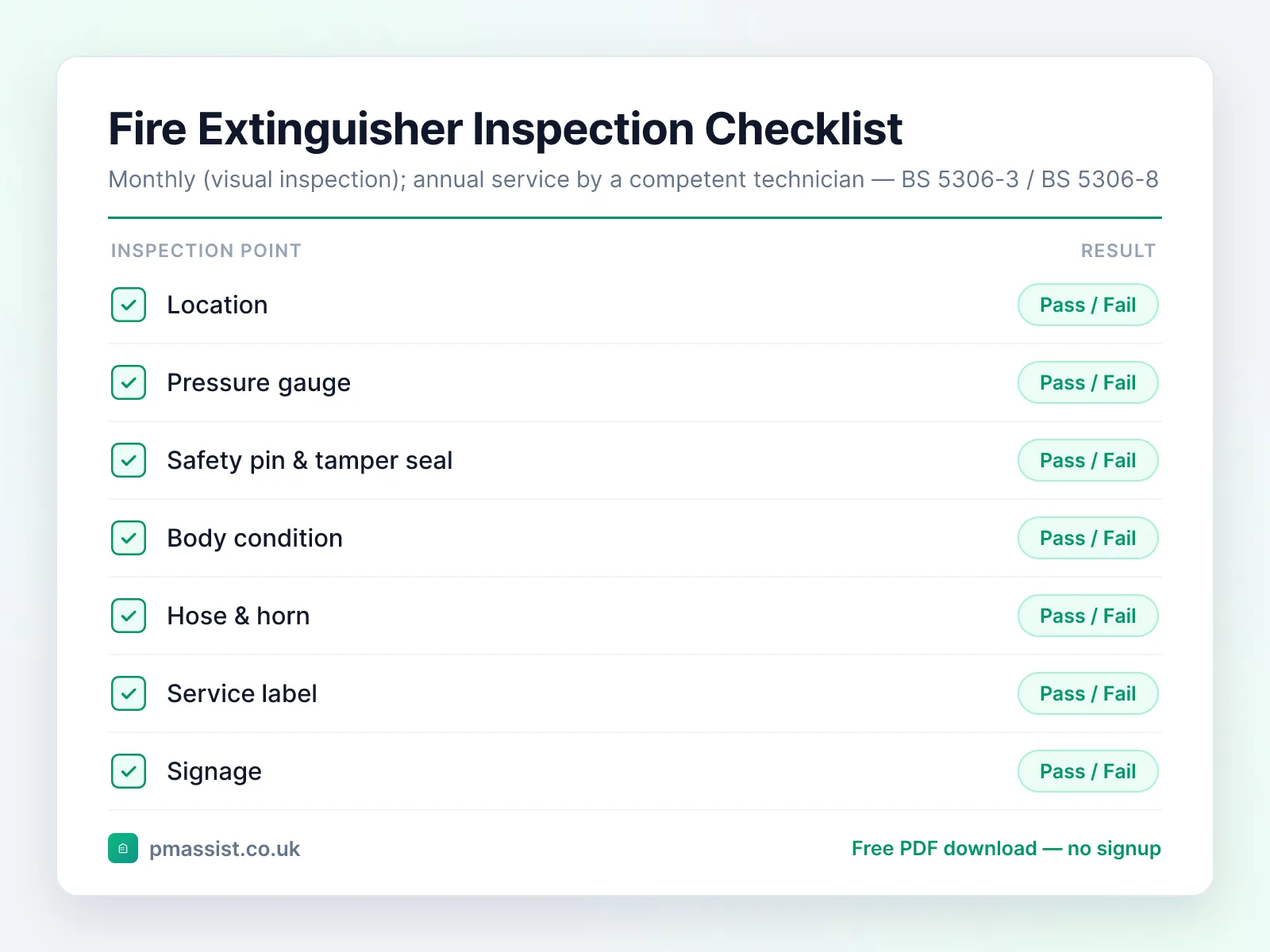
Monthly (visual inspection); annual service by a competent technician
The responsible person or a competent member of staff (monthly); a competent technician (annual service)
BS 5306-3 / BS 5306-8
A fire extinguisher inspection is the routine visual check that confirms each portable extinguisher is in place, accessible, correctly pressurised, and ready to use. Under BS 5306-3, the responsible person carries out a monthly visual check, and a competent technician carries out an annual basic service. This checklist covers the monthly visual inspection — a quick but important check that catches discharged, tampered, or missing extinguishers before they're needed.
Fire Extinguisher Inspection Checklist: what to check
Location
Extinguisher is in its designated position and not obstructed
Pressure gauge
Needle reads in the green operating band (where fitted)
Safety pin & tamper seal
Both present and intact — no sign of discharge or tampering
Body condition
No dents, corrosion, or damage to the cylinder
Hose & horn
Undamaged and free of blockage
Service label
Present and the next service date is not overdue
Signage
Location sign present, correct, and visible
Type suitability
Extinguisher type is appropriate for the risk in the area
Mounting
Bracket or stand secure and at the correct height
Record
Monthly check recorded in the fire log book
Download printable checklist templates from the templates library, or build a custom one with the checklist generator.
What this inspection typically costs
£10–£30 per extinguisher for annual servicing
- What moves the price
- Unit type and size drive the base rate — CO2 and specialist units cost more than water or foam. Providers discount per-unit rates for larger estates, so a site with 60 extinguishers pays notably less per unit than one with six. Extended service and refills are charged separately.
- Typical time
- A few minutes per unit; most single-site visits complete within a morning
Indicative UK market ranges compiled from published price guides, last reviewed August 2026. A planning guide, not a quotation — prices vary by region, building, and contractor.
Managing the records behind this inspection
Common inspection failures
- Extinguisher moved from its designated location or blocked by furniture
- Pressure gauge reading low or in the red (discharged or leaking)
- Missing safety pin or broken tamper seal
- Service overdue because the annual visit was missed
- Wrong extinguisher type for the risk (e.g. water near electrical equipment)
- Location signage missing or obscured
Related inspection checklists
What to record, and how long to keep it
Record each extinguisher individually by its unique identifier and location, not as a site total — an auditor asks about a specific unit, not a headcount. Log the monthly visual check (pressure gauge, seal, obstruction, damage), the annual service, and the extended service or refill dates, which run on a longer cycle by extinguisher type. Keep the commissioning certificate for each unit, because it establishes the baseline the service history runs from. Retain records for the life of the extinguisher plus the period your insurer and fire risk assessment require, and keep the log where the responsible person can produce it during an inspection rather than in a contractor's portal.
Compliance & CAFM
Run this fire extinguisher inspection on your phone
This checklist is a ready-made inspection form in PM Assist, included in every paid plan with the compliance register and planned maintenance.
- Complete it on your phone on site, with photos against each item.
- A failed item becomes a remedial action in one tap, with a priority and a deadline.
- The completed inspection can be logged against fire extinguisher service on the compliance register as the evidence it was done.
Sources
The regulatory positions on this page come from the following primary sources. Where guidance and legislation differ, the legislation governs — always confirm the requirements that apply to your own site and jurisdiction.
- Regulatory Reform (Fire Safety) Order 2005 — legislation.gov.uk
- Fire and explosion — Health and Safety Executive
Frequently asked questions
How often should fire extinguishers be inspected?
Who can inspect a fire extinguisher?
What do I record for a fire extinguisher inspection?
What is the difference between a fire extinguisher inspection, a service and an extended service?
What does a technician check in the annual fire extinguisher service?
How long do fire extinguishers last before they must be replaced?
Keep inspection records searchable
Once inspections are running, the records pile up. PM Assist makes your inspection records, O&M manuals, and certificates instantly searchable — so you can produce evidence on demand.
The inspection is the easy part. Finding last year's record is not.
Ask an O&M manual a question and get the answer back with the page it came from. No signup, and you can drop in your own PDF instead of the sample.
“When was the last F-Gas check?”Runs against a sample chiller manual so you can see the shape of the answer — then try it on one of yours.