Void Property Inspection Checklist
A free void and vacant unit checklist — security, water flushing, fire safety, leaks and damage, utilities and the weekly visits insurers usually require.
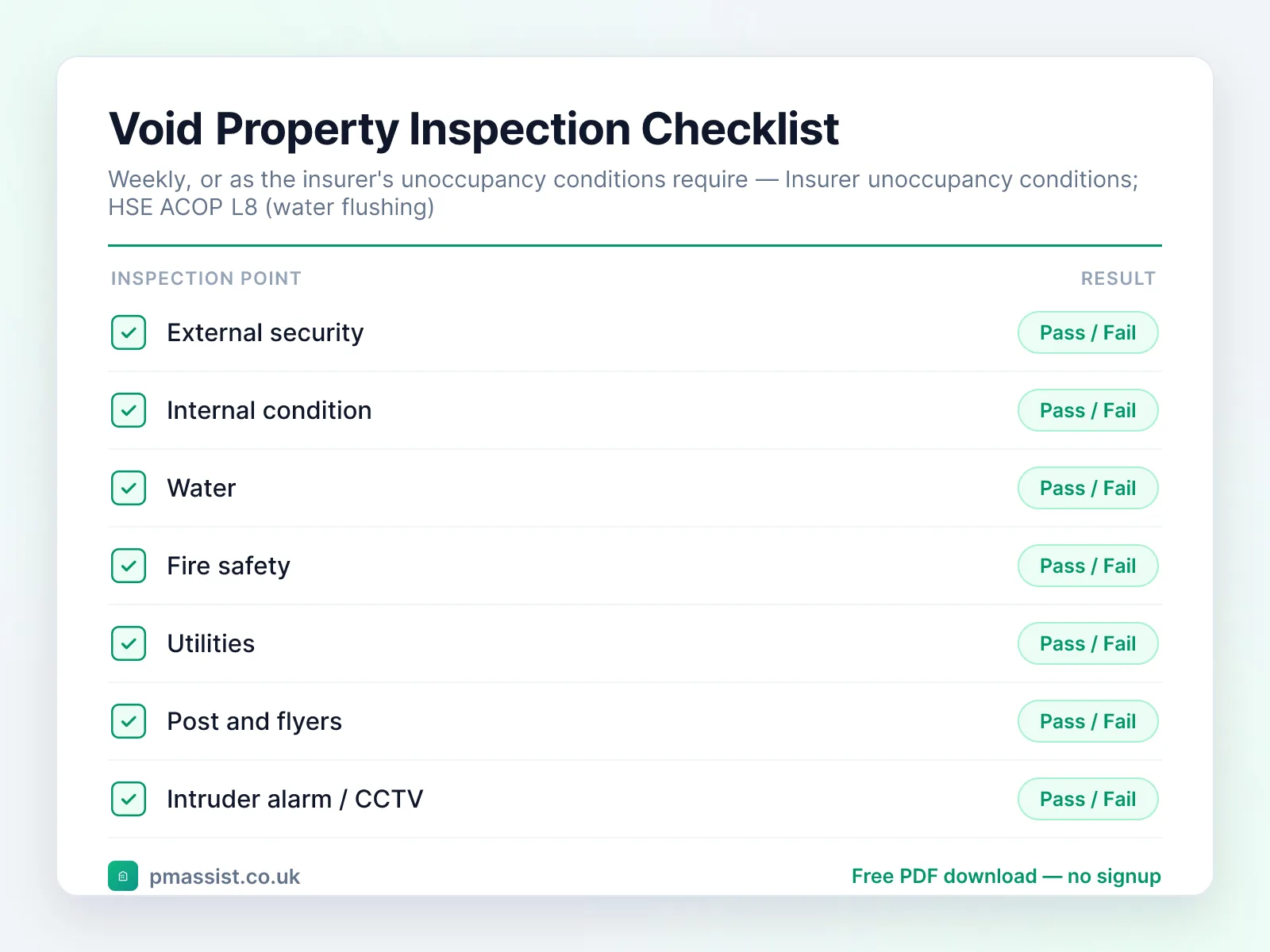
Weekly, or as the insurer's unoccupancy conditions require
The property manager, site team or a void management contractor
Insurer unoccupancy conditions; HSE ACOP L8 (water flushing)
A void property inspection is the regular visit to an empty unit or building to keep it secure, dry and insurable. Empty premises attract break-ins, squatting, arson and water damage that nobody notices for weeks, and insurers usually make cover conditional on weekly inspections with a written record. Water outlets also need flushing so that stagnant water does not create a legionella risk when the unit is reoccupied.
Void Property Inspection Checklist: what to check
External security
Doors, windows, shutters and boarding intact; no signs of entry
Internal condition
No signs of occupation, damage, leaks or damp
Water
Outlets flushed; no leaks; supply isolated where agreed
Fire safety
No combustible waste inside or against the building; alarm set if fitted
Utilities
Meters read; services isolated or left on as agreed
Post and flyers
Cleared so the unit does not look abandoned
Intruder alarm / CCTV
Set and working where fitted
External areas
No fly-tipping; gutters and drains clear
Download printable checklist templates from the templates library, or build a custom one with the checklist generator.
Common inspection failures
- Weekly visits missed, breaching insurance conditions
- Water left on and a burst pipe undiscovered for weeks
- Outlets not flushed before reoccupation
- Rubbish accumulating against the building, an arson risk
- No photographs to evidence condition
Related inspection checklists
Related maintenance & guidance
What to record, and how long to keep it
Keep a dated record of every visit with who attended, what was checked, photographs of anything found and the actions taken. Insurers commonly ask for this record after a claim, and a gap in visits can void cover.
Compliance & CAFM
Run this void property inspection on your phone
This checklist is a ready-made inspection form in PM Assist, included in every paid plan with the compliance register and planned maintenance.
- Complete it on your phone on site, with photos against each item.
- A failed item becomes a remedial action in one tap, with a priority and a deadline.
- Completed inspections stay on the building's record, ready for an auditor or insurer.
Frequently asked questions
How often should a void property be inspected?
Why flush water outlets in an empty building?
What should be recorded on a void inspection?
Keep inspection records searchable
Once inspections are running, the records pile up. PM Assist makes your inspection records, O&M manuals, and certificates instantly searchable — so you can produce evidence on demand.
The inspection is the easy part. Finding last year's record is not.
Ask an O&M manual a question and get the answer back with the page it came from. No signup, and you can drop in your own PDF instead of the sample.
“When was the last F-Gas check?”Runs against a sample chiller manual so you can see the shape of the answer — then try it on one of yours.