Lift Weekly Inspection Checklist
A free weekly lift check for site teams — levelling, doors and safety edges, the emergency alarm, car lighting and notices, with faults reported between services.
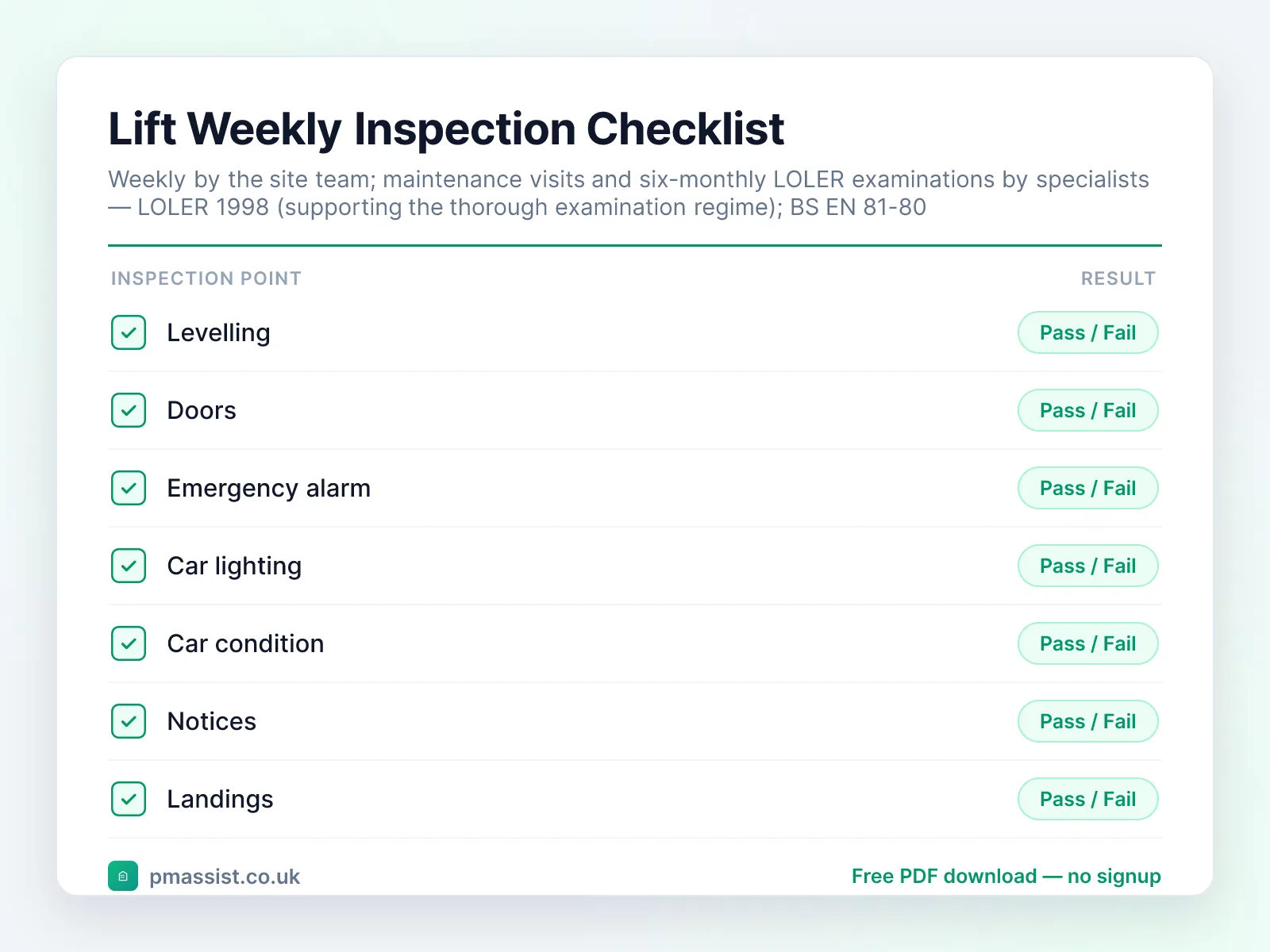
Weekly by the site team; maintenance visits and six-monthly LOLER examinations by specialists
The site or facilities team
LOLER 1998 (supporting the thorough examination regime); BS EN 81-80
A weekly lift check is a quick user-level inspection by the site team between the maintenance contractor's visits and the LOLER thorough examinations. It catches the everyday faults — poor levelling, doors re-opening slowly, a dead alarm button — before they cause a trip, an entrapment or a failed examination. It does not replace maintenance or LOLER: the site team observes and reports, and the lift engineer repairs.
Lift Weekly Inspection Checklist: what to check
Levelling
Car stops level with each landing — no trip step
Doors
Open and close smoothly; safety edge or light curtain re-opens them
Emergency alarm
Alarm button connects to the monitoring centre or sounds
Car lighting
Normal and emergency lighting working
Car condition
Floor, walls and buttons undamaged; indicators working
Notices
Capacity plate and emergency notice displayed
Landings
Call buttons and indicators working on each floor
Noise and ride
No unusual noise, vibration or jerking
Machine room / pit access
Locked and signed; no storage
Download printable checklist templates from the templates library, or build a custom one with the checklist generator.
Common inspection failures
- Poor levelling left unreported until someone trips
- Emergency alarm not connected after a line change
- Car lighting failed
- Storage in the machine room
- Faults reported verbally and never logged
Related inspection checklists
What to record, and how long to keep it
Log each weekly check with the date, lift, result and any fault reported to the lift contractor, with the contractor's call reference. The log shows the pattern of faults between visits, which is useful evidence when a lift keeps failing.
Compliance & CAFM
Run this lift weekly inspection on your phone
This checklist is a ready-made inspection form in PM Assist, included in every paid plan with the compliance register and planned maintenance.
- Complete it on your phone on site, with photos against each item.
- A failed item becomes a remedial action in one tap, with a priority and a deadline.
- Completed inspections stay on the building's record, ready for an auditor or insurer.
Frequently asked questions
Do lifts need a weekly check?
What is the difference between a weekly check and LOLER?
What should happen if the lift alarm does not work?
Keep inspection records searchable
Once inspections are running, the records pile up. PM Assist makes your inspection records, O&M manuals, and certificates instantly searchable — so you can produce evidence on demand.
The inspection is the easy part. Finding last year's record is not.
Ask an O&M manual a question and get the answer back with the page it came from. No signup, and you can drop in your own PDF instead of the sample.
“When was the last F-Gas check?”Runs against a sample chiller manual so you can see the shape of the answer — then try it on one of yours.