Racking Inspection Checklist
A free weekly racking check — uprights, beams and beam locks, damage grading, load notices and fixings, between the annual SEMA inspection.
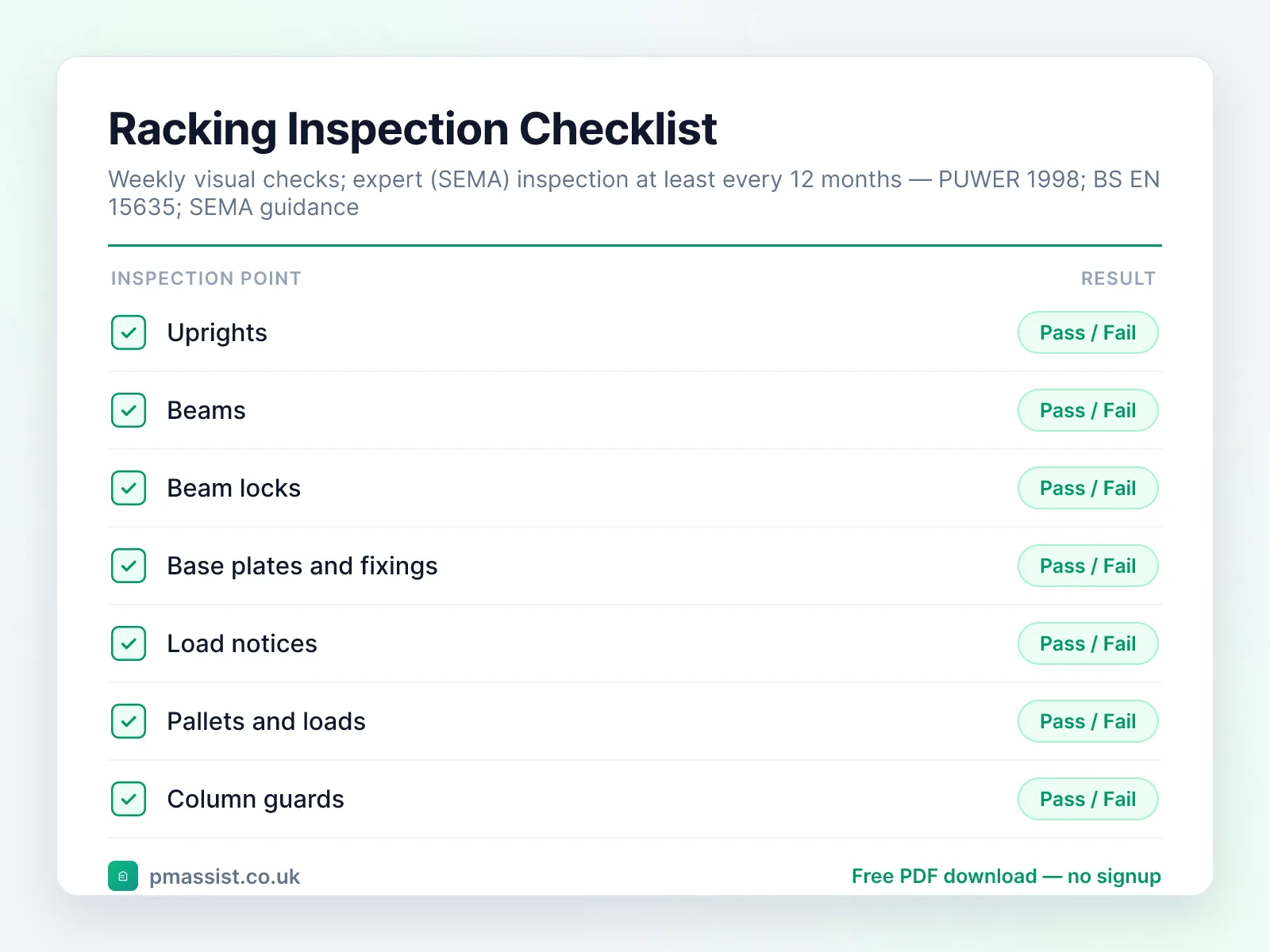
Weekly visual checks; expert (SEMA) inspection at least every 12 months
The person responsible for racking safety (weekly); a SEMA-approved inspector (annual)
PUWER 1998; BS EN 15635; SEMA guidance
Pallet and shelving racking is work equipment under PUWER and must be inspected so damage is found before it leads to collapse. BS EN 15635 and SEMA guidance recommend a documented visual inspection at least weekly by the person responsible for racking safety, and an expert inspection at least every 12 months. Damage is graded green, amber or red: red means offload and isolate immediately.
Racking Inspection Checklist: what to check
Uprights
No dents, bends, splits or twisting beyond acceptable limits
Beams
No bending, deflection beyond limits or impact damage
Beam locks
Every beam has its safety locks fitted
Base plates and fixings
Base plates present and floor anchors secure
Load notices
Safe working load notices displayed and loads within them
Pallets and loads
Pallets in good condition, loads stable and not overhanging
Column guards
End-of-aisle and column protectors in place
Damage grading
Damage graded green / amber / red and red bays offloaded
Download printable checklist templates from the templates library, or build a custom one with the checklist generator.
Common inspection failures
- Forklift impact damage to uprights not reported
- Missing beam locks
- Load notices missing or loads exceeding them
- Red damage not offloaded immediately
- No record of weekly inspections
Related inspection checklists
Related maintenance & guidance
What to record, and how long to keep it
Keep the weekly check log and the annual inspection report, recording each damaged component, its location, the damage grade and the action taken. Red damage should show when the bay was offloaded and when the repair was completed.
Compliance & CAFM
Run this racking inspection on your phone
This checklist is a ready-made inspection form in PM Assist, included in every paid plan with the compliance register and planned maintenance.
- Complete it on your phone on site, with photos against each item.
- A failed item becomes a remedial action in one tap, with a priority and a deadline.
- Completed inspections stay on the building's record, ready for an auditor or insurer.
Frequently asked questions
How often should racking be inspected?
What do red, amber and green mean on a racking inspection?
Who can inspect racking?
Keep inspection records searchable
Once inspections are running, the records pile up. PM Assist makes your inspection records, O&M manuals, and certificates instantly searchable — so you can produce evidence on demand.
The inspection is the easy part. Finding last year's record is not.
Ask an O&M manual a question and get the answer back with the page it came from. No signup, and you can drop in your own PDF instead of the sample.
“When was the last F-Gas check?”Runs against a sample chiller manual so you can see the shape of the answer — then try it on one of yours.